

How do we measure our products?
Gunnera manicata
Giant rhubarb, Brazilian giant rhubarb, Dinosaur food
Defra/APHA has deemed plants in trade previously considered to be Gunnera manicata to actually be a hybrid of the listed Species of Special Concern Gunnera tinctoria. This hybrid has been named ‘Gunnera x cryptica’.
Trade in Gunnera tinctoria and any of its hybrids including Gunnera x cryptica is an offence under the Invasive Alien Species (Enforcement and Permitting) Order 2019.
This page is kept for archival purposes only. Parts of this page have been edited to comply. If you have concerns about plants of this species in your garden, please contact APHA/DEFRA.
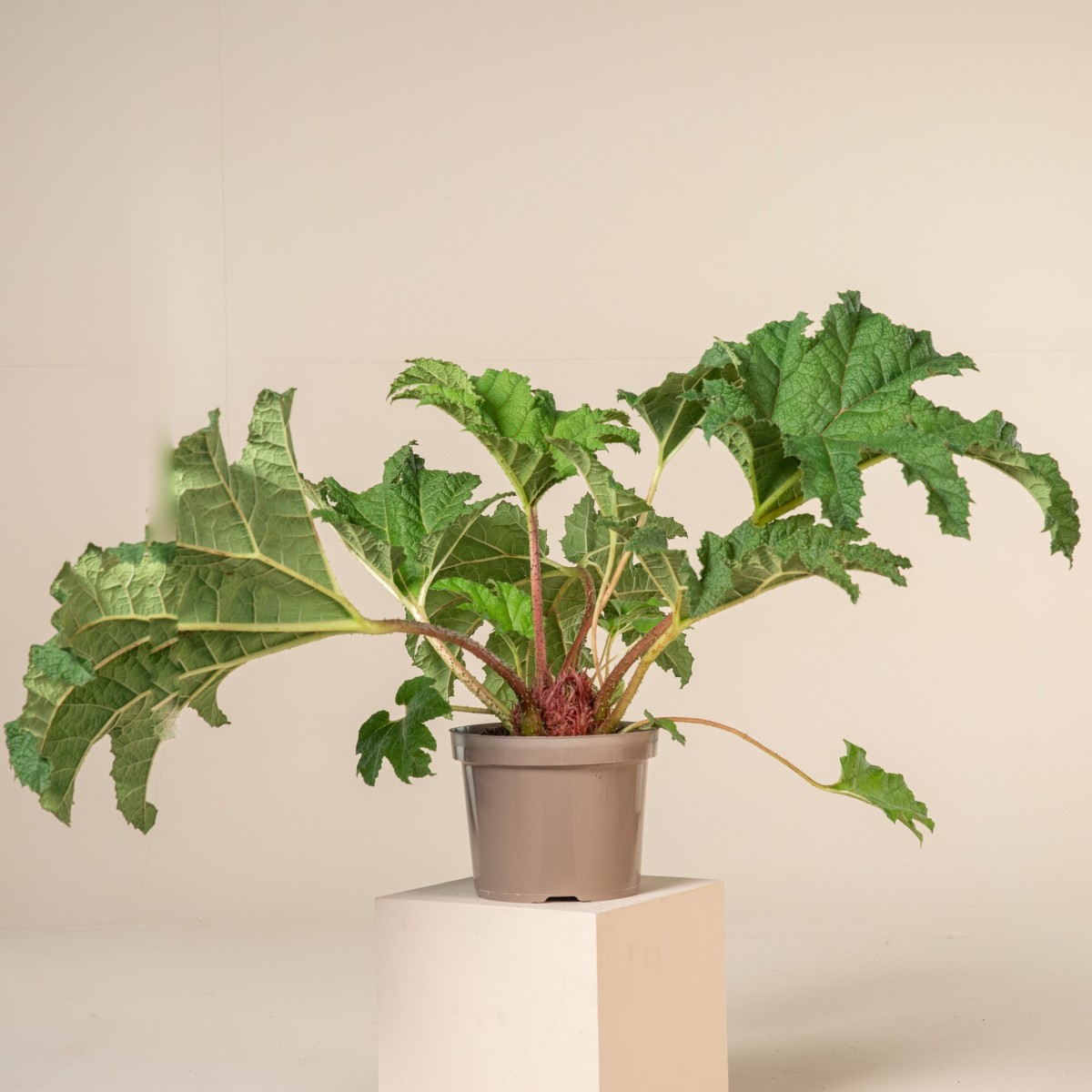
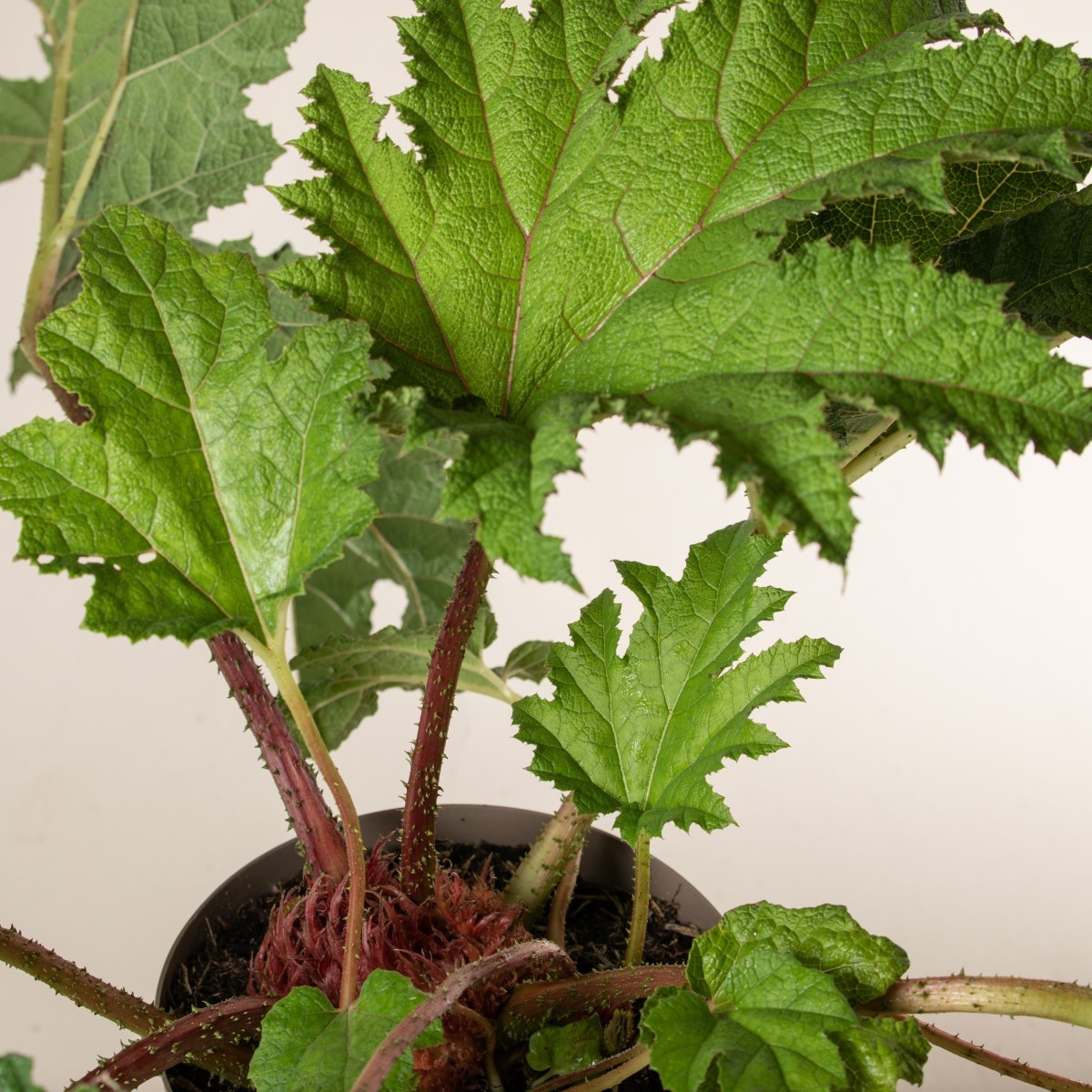
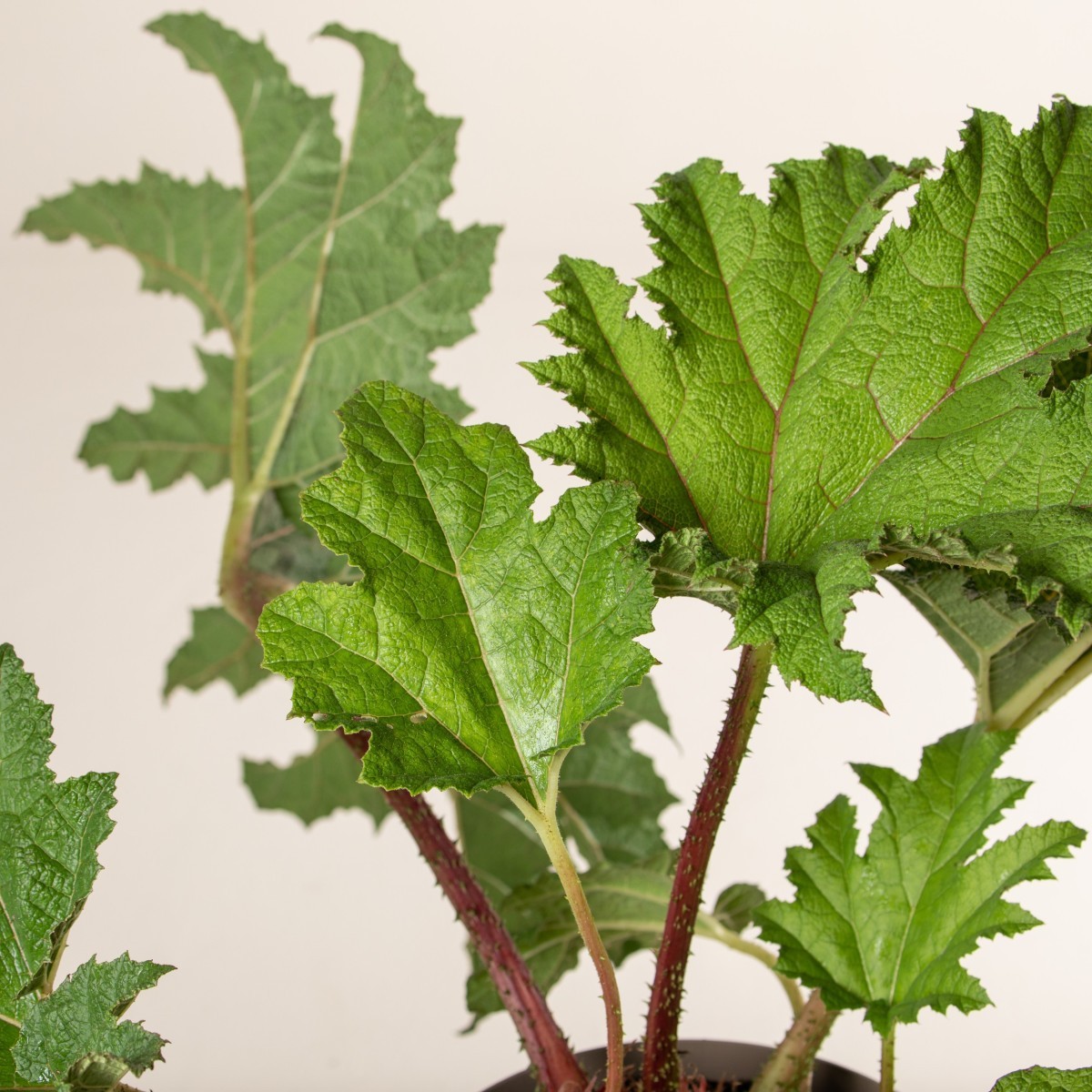
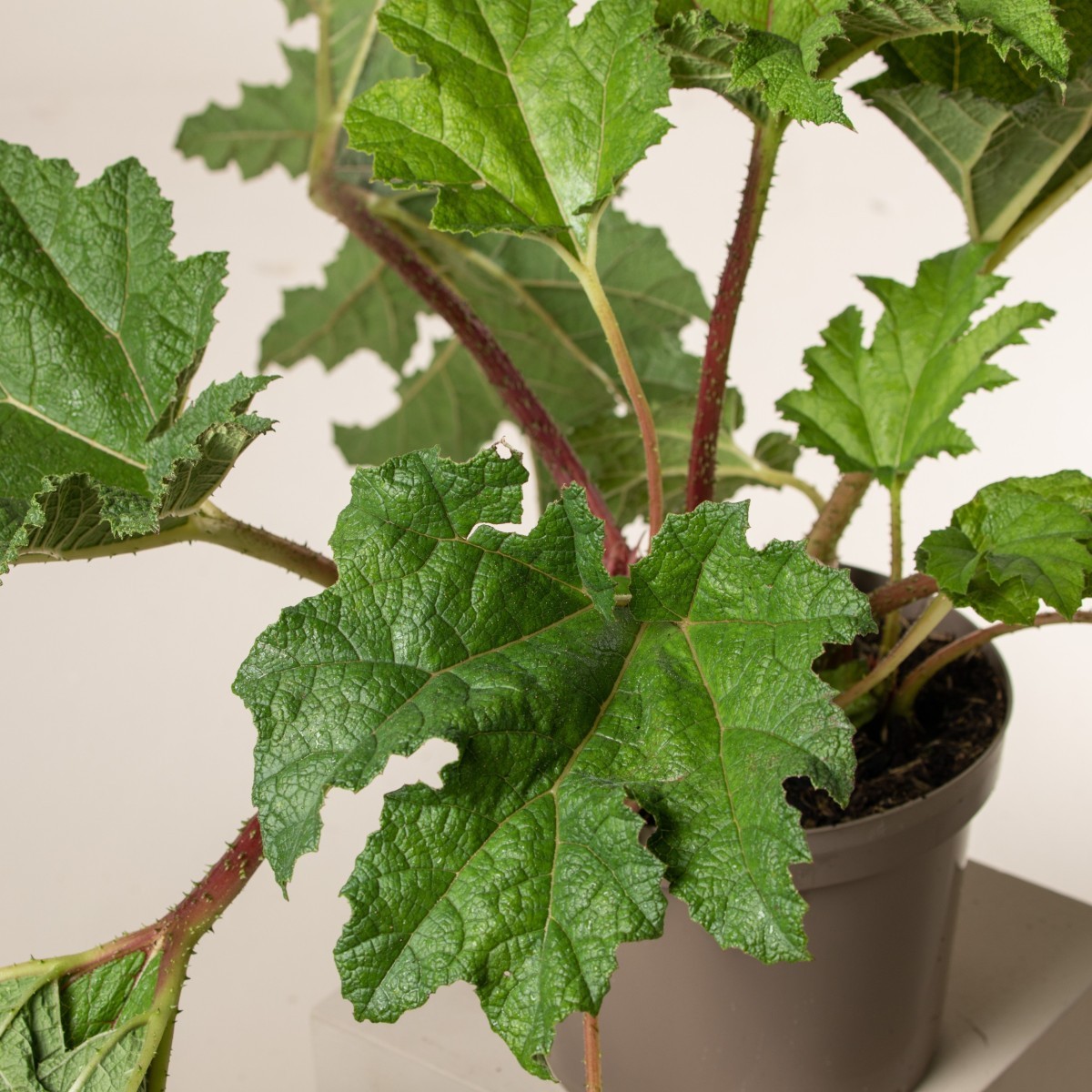
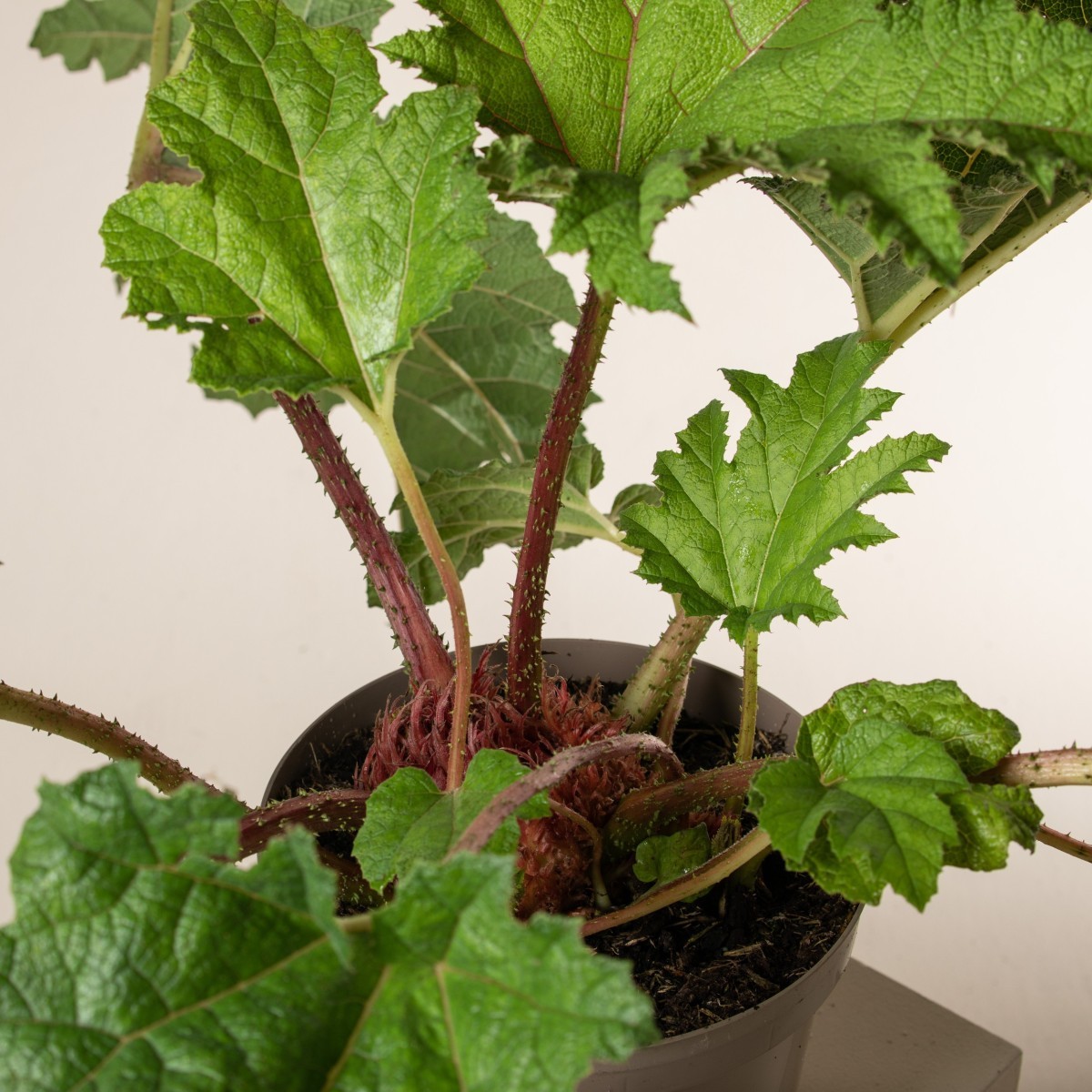
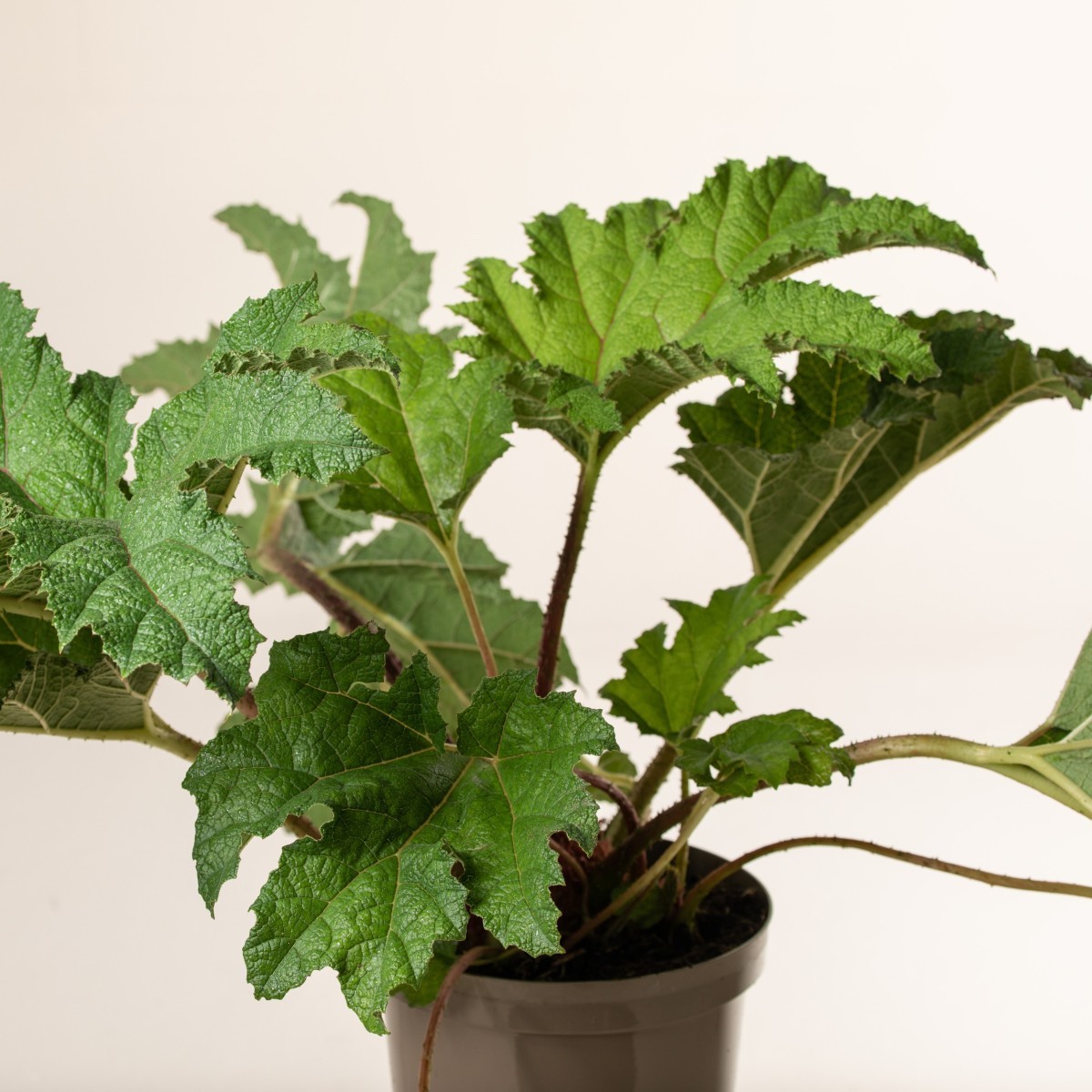
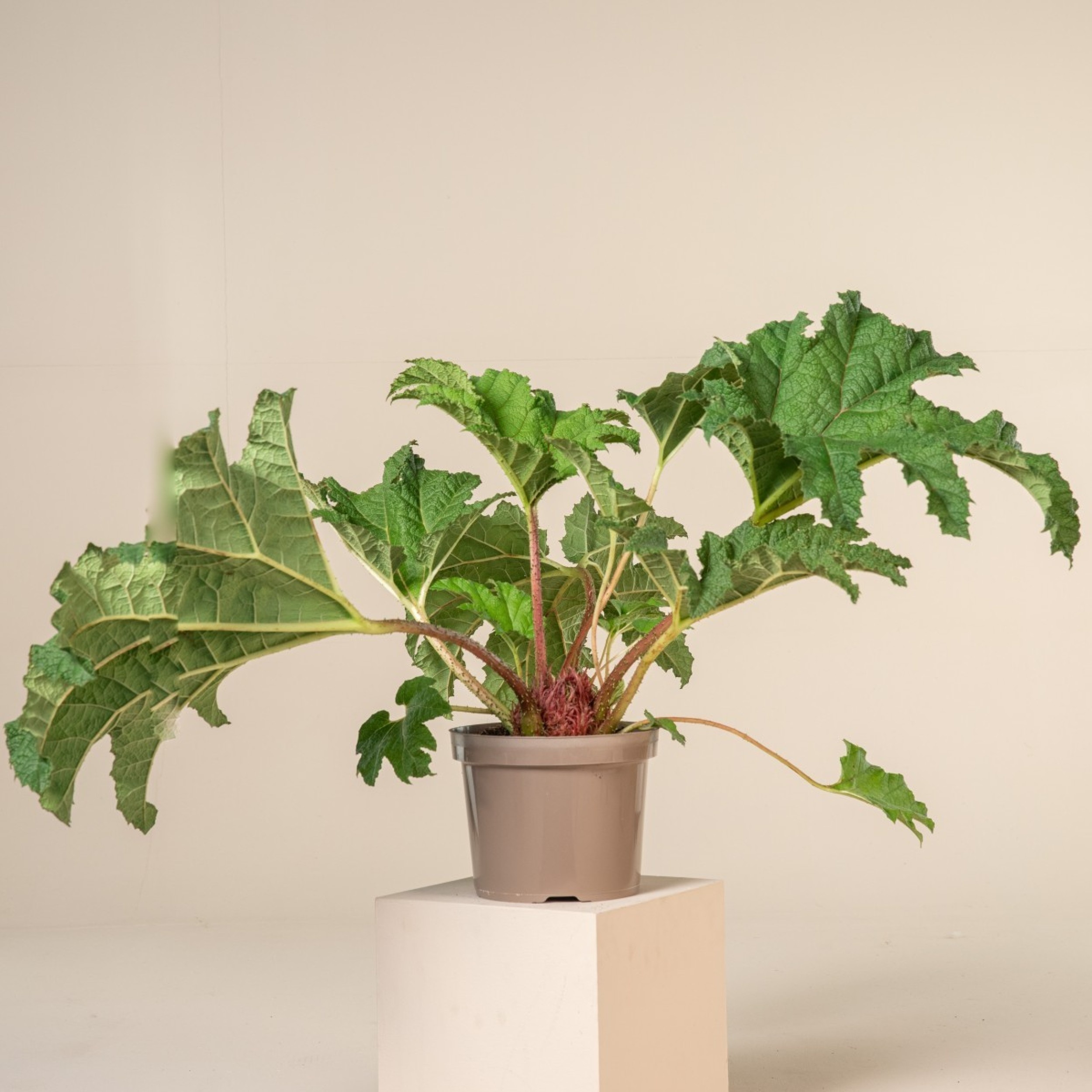
Gunnera manicata, commonly known as Giant Rhubarb or Dinosaur Food, is a remarkable perennial that captures attention with its impressive stature. Native to the moist forests of South America, this botanical giant can reach heights of more than 2.5 metres. Its massive, umbrella-like leaves span over 2 metres in diameter, creating a striking canopy.
During the summer, tall flower spikes emerge, boasting dense clusters of small, reddish-green flowers. Thrives in moist, acidic soils and full-sun or partial shade.
Plant Biography
Gunnera manicata, also known as Giant Rhubarb, originates from the damp forests of South America. This prehistoric-looking plant has a history that dates back to its native habitat, where it grew as part of the lush vegetation. Over time, it caught the attention of horticulturists and enthusiasts around the world due to its colossal size and unique appearance.
Introduced to cultivation, Gunnera manicata became a prized ornamental plant, admired for its dramatic leaves and towering flower spikes. Its impressive presence and intriguing history have secured its place as a captivating focal point in gardens and landscapes across various regions.
Gunnera manicata previously sold in the UK has been deemed to actually be a hybrid and it was classed a an invasive species. The information on this page reflects a historical view and does not apply to current situation.



Propagating Gunnera manicata
Propagation and trade of plants previously known as Gunnera manicata is strictly forbidden and is classed as an offence under the Invasive Alien Species (Enforcement and Permitting) Order 2019. The information on this page is presented for educational purposes only.
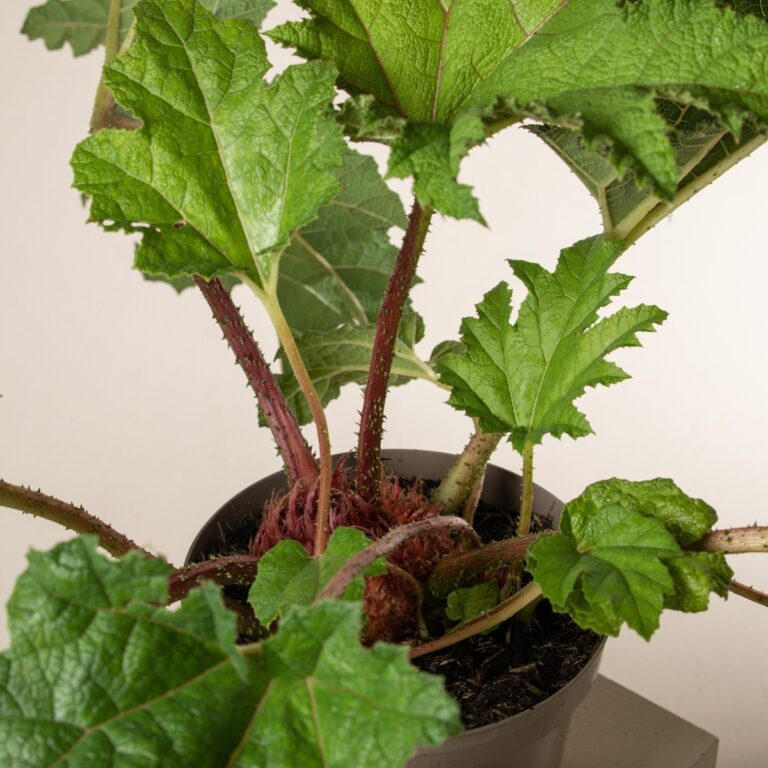
Gunnera manicata propagates easily through division. As the plant matures, it forms multiple crowns. You can carefully divide these crowns during the plant’s dormant period and replant them to create new plants.
Remember that Gunnera manicata can spread rapidly, so plan its location carefully to avoid overcrowding. With proper care, it can become a stunning focal point in a shaded garden or damp landscape.